The 2025 National Plumbing Code Is Here
…And Heat Pumps are the Reason You Should Care
Imagine a new Toronto high-rise where every suite is heated and cooled by heat pumps. On a humid July afternoon, hundreds of units are pulling moisture out of the air at once. All of that condensate has to go somewhere! For years, the path of least resistance was to tie it into the sanitary system and move on. But condensate is clear water waste — and the storm system, not the sanitary, is where it can and should go. The 2025 National Plumbing Code (NPC) of Canada, released in late December 2025, finally puts that in black and white.
Our team attended a recent briefing presented by a committee member who helped write the code. Keep reading for our key takeaways, and to learn what it all means for developers, contractors, and landlords in Ontario.
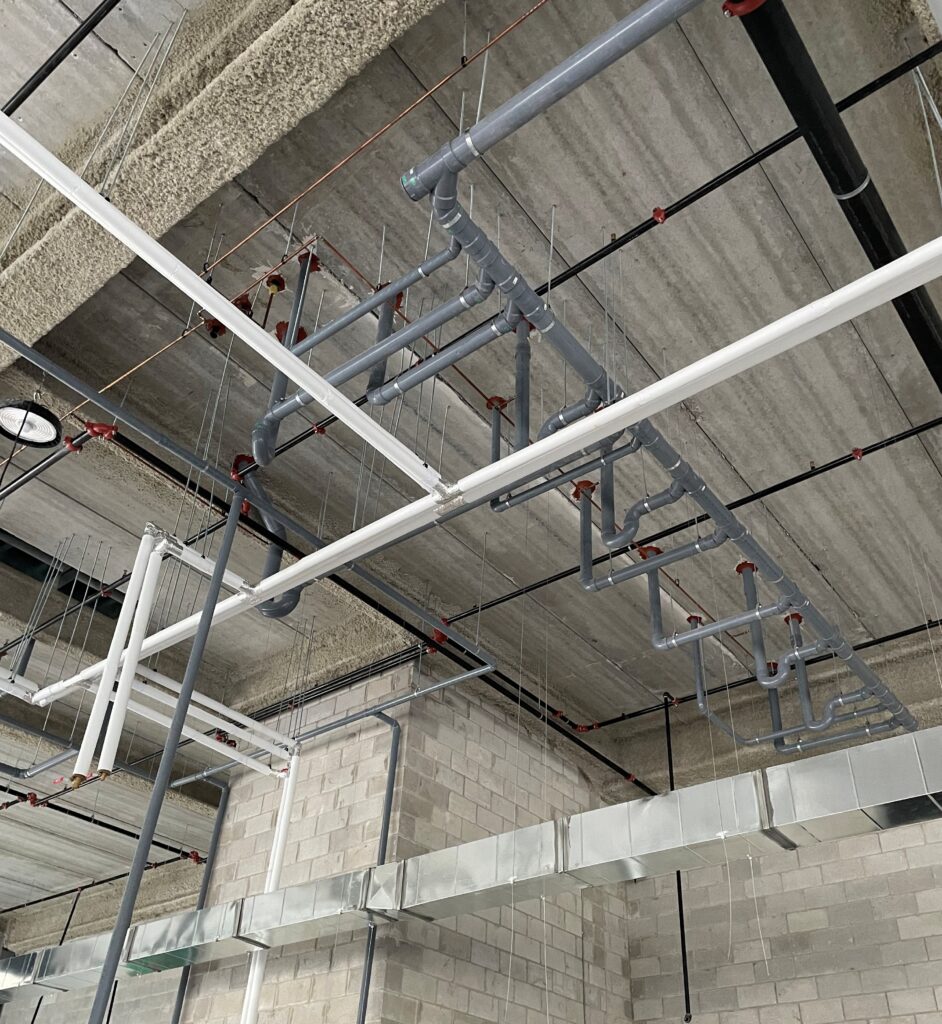
Drainage System
Condensate gets its own Drainage System
The biggest shift: condensate is no longer a footnote within clear water waste. With heat pumps multiplying across new buildings, the volume of condensate a building produces has grown enormously. The code now treats it accordingly. The 2025 NPC introduces dedicated requirements for condensate drainage systems, generally directed to storm rather than sanitary. For complex buildings, think of it as a fourth piping system alongside sanitary, storm, and vent — one that deserves the same care in design and sizing as the other three. Where equipment produces acidic condensate (condensing boilers and the higher-efficiency heat pumps entering the market) it must be properly neutralized before discharge.
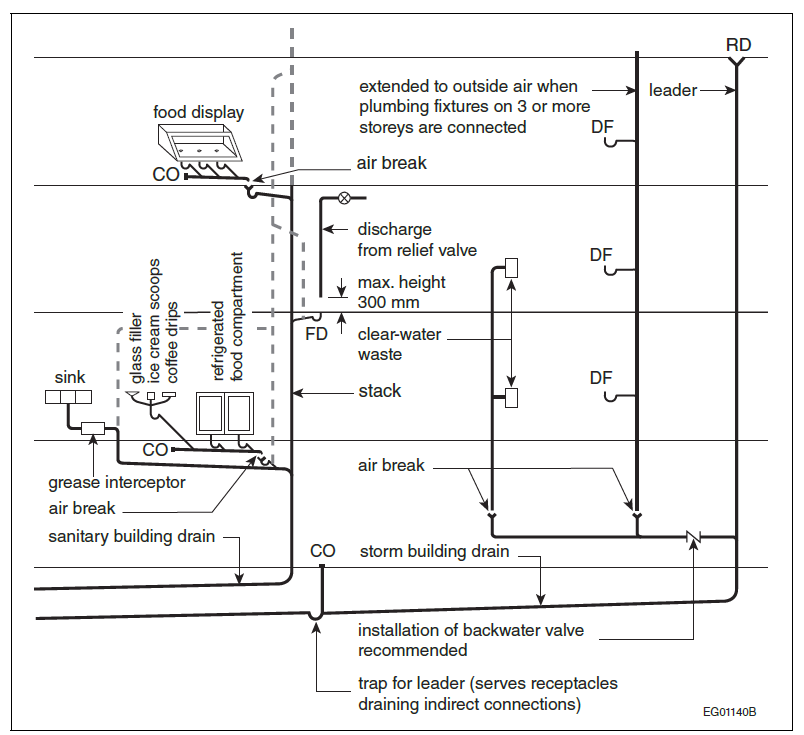
Figure A-2.4.2.1(1)(a)(ii) and (2)
Indirect Connections
From NPC
For Developers: that fourth pipe is a real line item – budget for it early, not in permit review!
For Contractors: expect condensate lines to be deliberately sized. The code now sets minimums (NPS ¾ generally, NPS ½ in dwelling units) and routed with proper air gaps.
For Landlords: when planning heat pump retrofits, ask where the condensate is going (and whether it needs treatment) before ordering equipment!
Potable Water Protection tightens up: Enter NSF 61
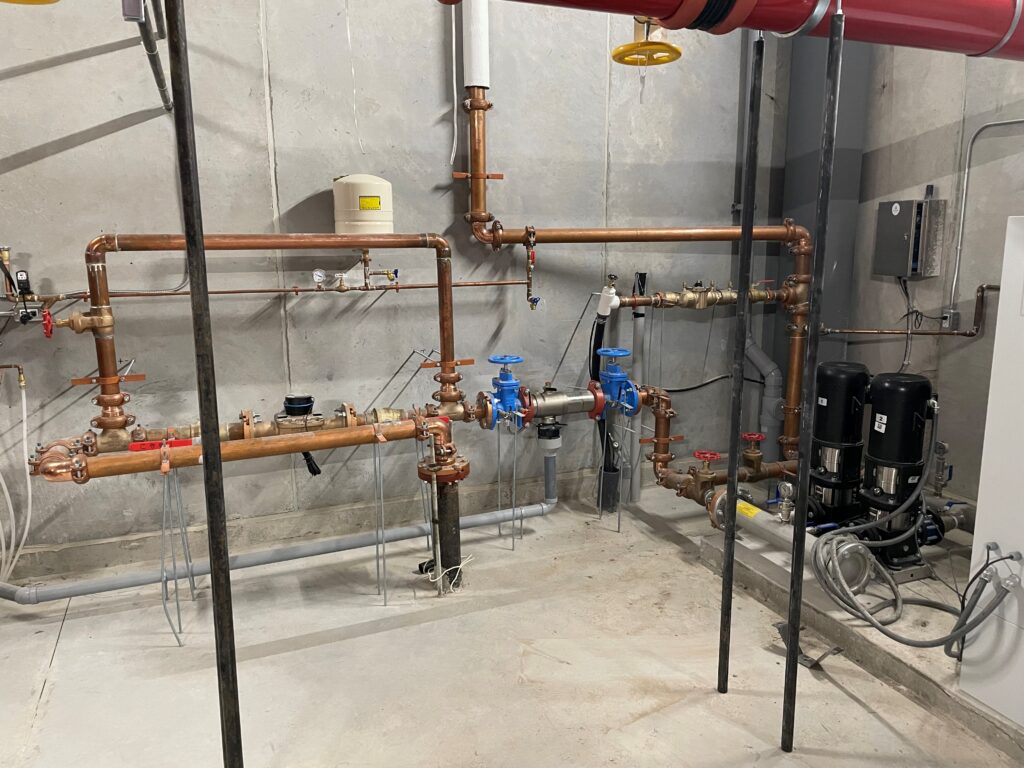
The 2025 code introduces new requirements to protect potable water from chemical contamination. The mechanism is a standard worth knowing: NSF/ANSI 61. Developed by NSF, an independent public-health certification body, it tests whether materials in contact with drinking water leach harmful contaminants such as lead, heavy metals or chemical additives into the water. A pipe can meet its material standard, look identical to the certified product beside it, and still fail NSF 61.
Under the 2025 NPC that certification now covers stainless steel piping, copper and brass fittings, and even the solders, fluxes, and welding filler metals used to join them.
For Developers check to ensure NSF 61 is written into your specifications.
For Contractors, it means checking for the NSF 61 mark on the product and on the can of solder. Do not assume the supplier sorted it out.
For Owners and Landlords, this is a quiet win for water quality and liability!
Clearer Rules for Roof Drainage
If you own or build large flat-roof buildings (warehouses, distribution centers, retail) this section is for you. Many of these roofs are deliberately designed to store water during a storm, releasing it slowly through control-flow drains. This ensures the municipal storm system isn’t overwhelmed. It’s a proven approach, but it puts real weight on getting the overflow protection right.
The 2025 NPC clarifies the requirements for roof drainage and adds design options with clearer guidance around scuppers and emergency roof drains (the overflow paths protecting the structure when primary drains are blocked). Historically these elements have caused dispute over sizing and placement. This clarification mitigates these long-standing issues.
For landlords with existing flat-roof buildings, it’s a good prompt to have your roof drainage reviewed. Blocked or undersized overflow protection is exactly the kind of quiet deficiency that shows up during a 100-year storm. And with backwater valve requirements under active discussion for the 2030 code cycle, flood protection is only moving in one direction.
What Happens Next in Ontario
The Ontario Building Code (OBC) contains Ontario’s plumbing requirements. This will be revised to align with the 2025 national code. A public review is expected this Fall. Until that adoption happens, today’s OBC still governs permits filed now. This is exactly why it’s worth designing to the 2025 requirements voluntarily. A building permitted under the current code but opening in 2027 will spend its whole life under the new one. In the meantime, the 2025 codes are free to download from the National Research Council, and Plumbing & HVAC’s coverage offers a good summary.
Questions about how these changes affect a project you’re planning?
That’s exactly the kind of conversation we like having!

Designs thaT
We’re here to deliver innovative, sustainable engineering solutions that help you thrive and create a reliable, resilient future.
